Gone and Back Again: Why We Can't Get Enough of Artists Who Vanished and Returned Changed
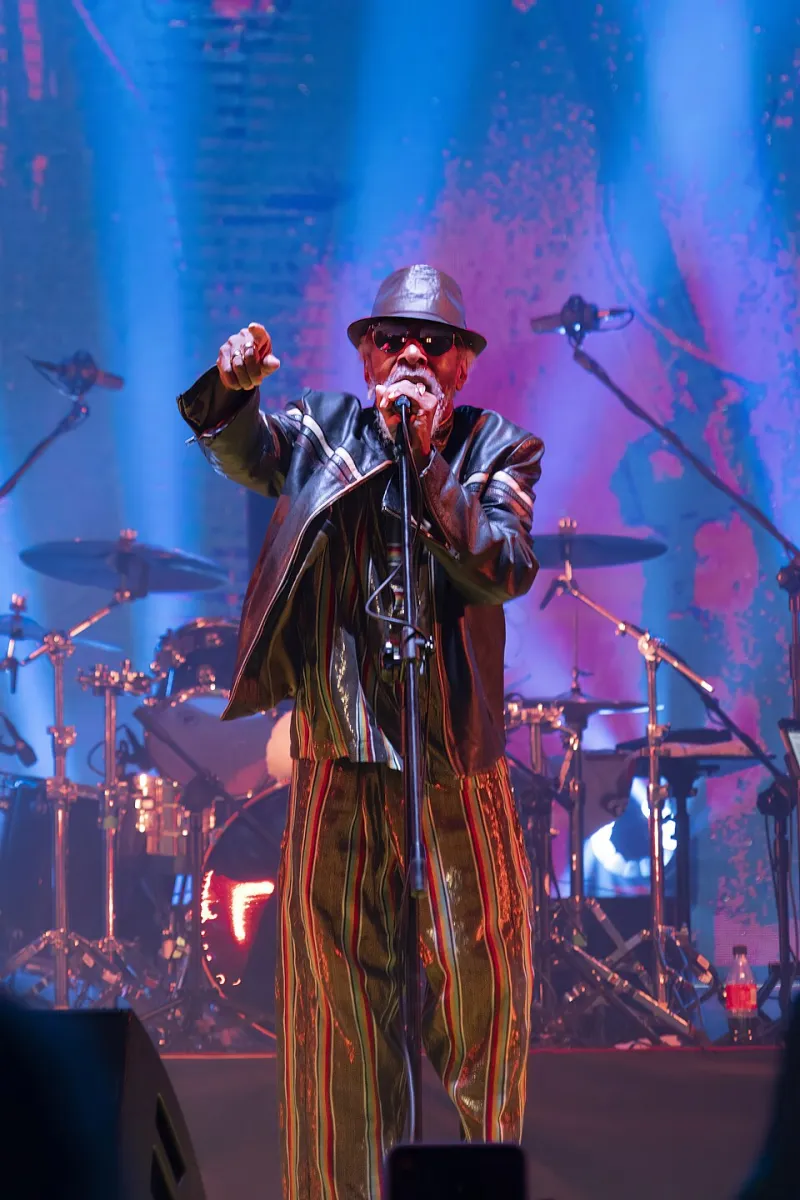
Photo: Krzysztof Popławski, CC BY-SA 4.0, via Wikimedia Commons
Somewhere between the first act and the third, the most interesting version of a life often goes underground.
The artist who was everywhere and then, suddenly, wasn't. The musician who stopped making records and moved somewhere nobody expected. The actress who walked away from a career that looked, from the outside, like everything — and then came back a decade later doing the kind of work that makes people forget what they thought they knew about her.
We are completely, almost embarrassingly obsessed with these stories. And it's worth asking why.
The Architecture of the Disappearance
Not every absence reads the same way. There's a meaningful difference between an artist who quietly fades and one who seems to choose to leave — who makes the vanishing feel intentional, even if nobody outside their immediate circle knows what actually happened.
Daniel Day-Lewis retired from acting in 2017 after Phantom Thread. No scandal, no breakdown, no dramatic explanation. Just: done. The response was almost reverential. The mystery deepened the legend. People still talk about whether he'll return the way they'd talk about a comet that might swing back around.
Laurie Anderson largely stepped away from mainstream visibility for years at a stretch, only to resurface with work that felt even more singular than what came before. Fiona Apple made fans wait eight years between Extraordinary Machine and The Idler Wheel, and when it arrived, the critical reception bordered on the spiritual.
The pattern holds: the longer and more enigmatic the absence, the more weight the return carries. We're not just greeting someone who came back. We're receiving something we'd begun to believe was lost.
What We're Really Rooting For
Here's the thing about comeback narratives that doesn't get said enough: we're not actually rooting for the artist. Not primarily. We're rooting for the idea that the story doesn't have to end where it seemed to end.
American culture has a complicated relationship with failure and reinvention. On one hand, we celebrate the underdog and the second chance almost reflexively — it's practically a national mythology. On the other, we consume public collapses with an appetite that's genuinely difficult to look at directly. We watch the fall, and then we need the resurrection, because the fall without the resurrection is just tragedy, and tragedy without meaning is hard to sit with.
The comeback narrative gives the fall meaning retroactively. It reframes the disappearance as necessary. The artist didn't fail — they were becoming. The silence wasn't emptiness; it was gestation.
We need this framework because most of us have our own version of the disappeared years. The period where things didn't work out. Where we stepped back, or got knocked back, and had to figure out who we were without the thing that had defined us. The artist who comes back changed is proof that those years don't disqualify you. They might actually be the point.
The Mechanics of the Modern Comeback
The entertainment landscape has become remarkably good at constructing comeback narratives, even when the underlying reality is more complicated than the story suggests.
The documentary format has been particularly useful here. Films like Amy, Searching for the Wrong-Eyed Jesus, and various streaming deep-dives into musicians who fell off the radar have taught audiences a specific emotional grammar: here is what they were, here is what happened, here is what remains. The structure is almost liturgical.
Podcasts have added another layer. Long-form interview formats allow formerly disappeared figures to control the re-emergence, to tell the story of the absence on their own terms. When someone like Chappell Roan discusses the years before her breakthrough, or when a filmmaker talks about the project that almost broke them before the one that made them, the confession functions as both explanation and invitation. Now you know. Now you can come back in.
Social media, ironically, has made genuine disappearance both harder and more valuable. Because full absence is nearly impossible in the attention economy, the artists who manage it — or who resurface after it — carry an almost anachronistic mystique. They've done something that the current environment makes structurally difficult. That scarcity matters.
When the Return Is the Work
Some of the most interesting comebacks are the ones where the absence itself becomes the subject matter — where the artist doesn't just return but makes art out of the experience of having left.
Justin Vernon's early Bon Iver mythology was built almost entirely on this premise. Recording an album alone in a Wisconsin cabin during a period of physical and emotional collapse produced For Emma, Forever Ago, a record that felt like it had been made in another dimension. The circumstances weren't just backstory. They were the content. The isolation was audible.
Same with Sharon Van Etten, who spent years working in a record store while putting music aside, then came back with Remind Me Tomorrow — a record that sounded like someone who had lived a whole life in the gap and brought all of it back with her.
What these artists share is that the return isn't a reset. They're not trying to pick up where they left off. The disappearance changed them, and the work reflects that change openly. That honesty is what audiences respond to. We can feel the difference between an artist who came back because the opportunity arose and one who came back because they finally had something new to say.
The Stories We Tell Ourselves
At the deepest level, our obsession with comeback narratives is about our relationship to time and to the self. We want to believe that the person we are at our lowest point isn't the final version. That the story has more chapters. That disappearing — from the spotlight, from productivity, from public legibility — isn't the same as being over.
Every artist who vanishes and returns carrying something new is evidence for a proposition most of us find genuinely comforting: that the years spent in the dark weren't wasted. That becoming takes as long as it takes. That the silence between the acts is part of the performance.
We watch these stories and we recognize ourselves in them — not as artists, necessarily, but as people who have had to go somewhere interior and uncertain before we could come back out changed.
That's not entertainment. That's permission.
And we are, apparently, endlessly hungry for it.