Standing at the Window: Why the Character Who Watches the Change Matters More Than the One Who Changes
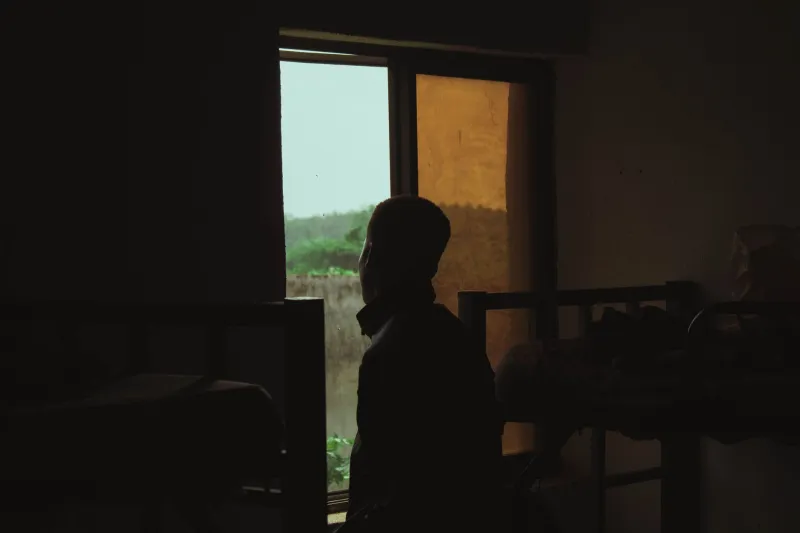
There's a moment in nearly every prestige drama where the camera lingers not on the person falling apart or pulling themselves together, but on the face of someone nearby — a spouse, a best friend, a coworker — who is simply watching. Their expression is hard to read. They're not the hero. They're not the villain. They're the witness. And increasingly, that's the character we can't stop thinking about after the credits roll.
Something has shifted in the stories we're drawn to. The transformation arc — that reliable engine of narrative satisfaction — hasn't gone anywhere. But the emotional weight of a story is migrating. It's drifting from the person at the center of change toward the person positioned just outside it, close enough to feel the heat but not close enough to get burned. Or maybe they are getting burned. That's the whole question, isn't it?
The Witness Has Always Been There — We Just Weren't Watching
Look back at the canon and you'll find observer characters everywhere, usually playing supporting roles we appreciated but didn't examine too closely. Think of Nick Carraway watching Gatsby implode. Think of Dr. Watson dutifully recording Holmes's brilliance and deterioration. Think of every long-suffering wife or patient best friend in a prestige cable drama who existed mostly to reflect the protagonist's journey back at the audience.
For a long time, these characters were narrative furniture. Functional. Necessary for the protagonist's arc to make sense, but not particularly interesting in their own right. The story wasn't about them. It was happening to someone else, and they were just there to witness it.
But somewhere in the last decade of television and literary fiction, writers started asking a more uncomfortable question: what is it actually like to stand that close to someone else's transformation and not be transformed yourself? And what does it mean if you are changed — just not in the ways anyone bothered to document?
The Real Drama Is the Distance
What makes the observer character so psychologically rich is the gap — the space between them and the person changing. That gap is where complicity lives. It's where guilt accumulates. It's where love curdles into something more complicated.
Take a show like Succession, which for all its surface chaos is really a masterwork in observer psychology. Characters like Shiv Roy spend entire seasons watching their family members lurch through moral free falls, positioning themselves as the sane one, the reasonable one, the one who sees clearly. And then the show's real cruelty kicks in: we start to see that watching without intervening is its own kind of action. Standing at the window is a choice. The witness is never truly neutral.
Or consider the literary tradition here — Kazuo Ishiguro has built an entire career on observer narrators who insist on their own peripheral status while quietly revealing how deeply implicated they are in everything they claim to have merely watched. Stevens in The Remains of the Day doesn't transform. He watches his employer make catastrophic moral choices and tells himself he was just the butler. The novel's devastating power comes entirely from understanding that this is not a defense. It's a confession.
Why Now? What We're Really Looking For
The timing of our renewed fascination with observer characters isn't accidental. We are living in an era defined by collective witnessing. Social media turned everyone into a bystander with a camera. Political upheaval made watching — and deciding whether to do more than watch — a daily moral negotiation. The pandemic isolated millions of people who found themselves watching other people's crises from a distance, unable to intervene, unsure if they even should.
The observer character resonates because a lot of us feel like observers. We watch friends cycle through self-destruction and recovery. We watch colleagues rise and fall. We scroll through strangers' transformations — the weight loss journey, the sobriety announcement, the public breakdown — and we feel something complicated that isn't quite empathy and isn't quite voyeurism but sits uncomfortably between them.
Stories about witnesses give us a place to put that feeling. They take the experience of watching someone else's life do the dramatic work and treat it as worthy of serious examination. That's a form of recognition that feels rare and, honestly, kind of relieving.
The Complicity Problem Nobody Wants to Name
Here's where it gets genuinely uncomfortable. The observer character's growing prominence in serious fiction isn't just about emotional resonance — it's about moral reckoning. These characters force a question that transformation narratives conveniently sidestep: if you watched and said nothing, what does that make you?
The redemption arc has a built-in escape hatch. The protagonist suffers, changes, earns forgiveness, moves forward. The story has a shape that resolves the tension. But the observer's story doesn't resolve so neatly. They didn't fall. They didn't have to climb back up. They just stood there while someone else did both. And the question of whether that makes them innocent or quietly guilty is one that good fiction refuses to answer cleanly.
This is why some of the most talked-about supporting performances in recent memory belong to observer characters. Actors and writers are finding that there's more complexity available in stillness than in the theatrical work of transformation. The character who has to convey what it costs to watch — and to keep watching — is doing something technically and emotionally demanding that doesn't always get its due.
What the Witness Teaches Us About Ourselves
Maybe the deepest reason we're drawn to these stories is that they let us rehearse a version of self-examination that's lower stakes than actual change. The observer character is close to the fire without being in it. And reading or watching them, we get to ask: would I have said something? Would I have intervened? Would I have understood what I was seeing in time to matter?
Usually, the honest answer is uncomfortable. Usually, the witness character is us — the person who saw enough to know better and chose, for a hundred defensible reasons, to stay at the window.
The stories worth telling aren't always about the person who transforms. Sometimes they're about everyone who watched it happen and had to figure out what to do with what they knew. That's not a supporting role. That's the whole complicated, human thing.