We Came for the Art and Stayed for the Breakdown: How Making-Of Stories Became the Main Event
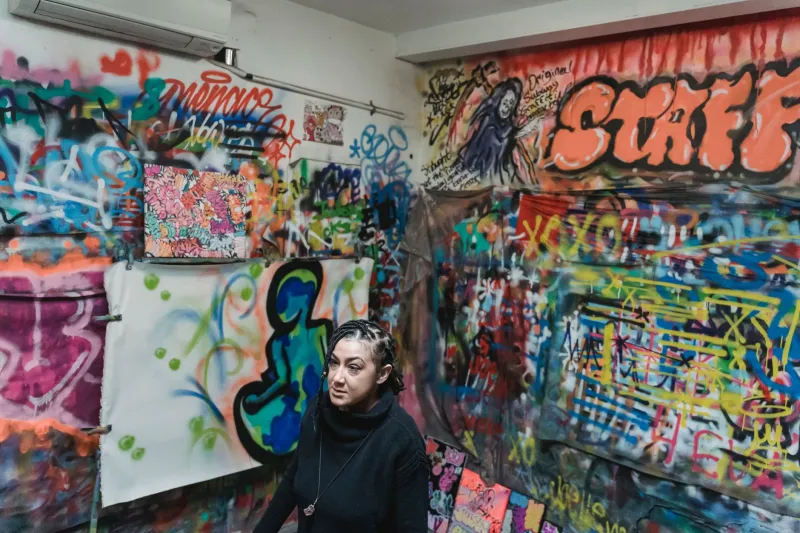
There's a particular scene that shows up in almost every documentary about creative work. The artist — musician, filmmaker, novelist, painter, doesn't matter — is sitting alone somewhere. The room is a disaster. There's a half-empty coffee cup, a stack of crumpled drafts, maybe a guitar in the corner that hasn't been touched in weeks. And the artist looks directly at the camera and says some version of: I have no idea what I'm doing.
Audiences eat it up every single time.
We have entered a strange and fascinating era in American entertainment where the story of making the story has become just as compelling — sometimes more compelling — than the story itself. From the explosion of behind-the-scenes docuseries to films about filmmaking to memoirs structured entirely around the terror of writing a memoir, meta-narratives about the creative process have quietly evolved into their own full-blown genre. And the question worth sitting with isn't just why now — it's what does this hunger reveal about us?
The Finished Product Has a Trust Problem
Here's the honest diagnosis: we've become suspicious of polish.
Decades of marketing machinery, social media curation, and algorithmic content delivery have trained a generation of American audiences to read perfection as performance. When something arrives fully formed and gleaming — a debut album with pristine production, a film with seamless visual effects, a novel with a gorgeous cover and glowing blurbs — the instinctive modern response isn't awe. It's skepticism. Who helped with this? What are they hiding? What did the real version look like before the PR team got involved?
Meta-narratives short-circuit that suspicion. They hand you the mess upfront. The deleted scenes aren't tucked away on a special edition disc — they're the whole point. Films like Adaptation, Charlie Kaufman's gloriously unhinged meditation on screenwriting a screenplay about screenwriting, or Alejandro González Iñárritu's Birdman, which blurs the line between an actor's artistic identity and his psychological disintegration, don't just reference the creative process. They collapse the distance between making and meaning entirely.
When we watch someone's authentic struggle, we trust the outcome more. Or at least, we trust the person.
The Docuseries That Turned Process Into Drama
Streaming has been the rocket fuel for this shift. Platforms like Netflix, HBO Max, and Disney+ have discovered that audiences will invest deeply in multi-part documentary series about creative production — not because the subject matter is inherently dramatic, but because the vulnerability is.
Get Back, Peter Jackson's sprawling reimagining of the Beatles' Let It Be sessions, is essentially eight hours of four guys arguing about chord progressions and staring into space. It was also one of the most discussed pieces of entertainment content in 2021. Not because it revealed scandal, but because it revealed process — the boredom, the friction, the false starts, the moment a song that would become iconic emerged out of what looked like nothing.
Similarly, Miss Americana works as a Taylor Swift documentary not because it delivers the polished brand narrative fans already knew, but because it shows the machinery behind the brand occasionally catching fire. The creative anxiety, the need for approval, the cost of perfectionism — these aren't promotional talking points. They're the genre now.
What Jackson and directors like him figured out is that process is inherently suspenseful. You know the Beatles made Let It Be. You know Swift released the album. The tension isn't will they finish it — the tension is how did anything coherent survive the chaos?
Books About Writing Books, Films About Making Films
Literature has its own version of this phenomenon, and it's been building for a while. The meta-novel — a book that interrogates its own construction while the reader is inside it — has moved from postmodern experiment to mainstream expectation. Authors like Paul Auster, Sheila Heti, and Rachel Cusk have built entire celebrated careers on the premise that the struggle to make the work is the work.
Heti's How Should a Person Be? is practically a manifesto for the genre — a novel that refuses to disguise itself as fiction, that keeps the seams visible, that asks whether authenticity can survive the act of shaping raw experience into narrative. Cusk's Outline trilogy does something similar in a colder register, dismantling the very idea of a narrator with a coherent self to protect.
In film, the tradition runs from Fellini's 8½ — a director making a film about a director who can't make a film — through to more recent entries like The Fabelmans, Spielberg's semi-autobiographical excavation of how movies became his language for processing an unruly childhood. What these works share is a willingness to treat creative doubt not as weakness to overcome but as material to mine.
What We're Actually Looking For
Psychologically, the appeal operates on at least two levels simultaneously.
The first is permission. When we watch a celebrated artist admit that the blank page terrifies them, that the first draft was embarrassing, that they almost quit three separate times — we feel less alone in our own paralysis. Meta-narratives about creative struggle have a democratizing effect. They whisper that the gap between someone who makes things and someone who only consumes things might be smaller than the finished product suggests.
The second is intimacy. In an attention economy saturated with content engineered for engagement, the behind-the-scenes story offers something that feels genuinely unmediated. Even when it isn't — and it almost never is — the aesthetic of rawness functions as a form of closeness. We feel like we know the artist in a way that simply listening to the album or watching the film doesn't provide.
This is the edge that makes meta-narratives so potent as a genre. They promise access to something prior to the performance. They claim to show you the person before the persona assembled itself.
The Risk of Eating the Process Alive
There's a legitimate concern lurking underneath all of this, and it deserves acknowledgment.
When the making-of becomes the main attraction, there's a risk that the art itself starts serving the narrative of its own creation rather than the other way around. Some artists have begun structuring their work explicitly for the behind-the-scenes content — the album rollout, the documentary companion piece, the social media diary of the writing process — in ways that subtly corrupt the work itself. The struggle becomes curated. The doubt becomes a brand asset.
At that point, we're not watching authentic creative chaos. We're watching a very polished story about authentic creative chaos, which puts us right back where we started: suspicious of the polish.
The best meta-narratives — the ones that actually earn their place in the genre — resist that trap. They stay genuinely uncomfortable. They don't resolve the doubt into triumph. They let the viewer sit inside the uncertainty without the release of a tidy arc.
Because that, ultimately, is what this genre is really selling: the radical idea that the mess doesn't have to be cleaned up before it becomes worth watching. That the edge of experience — uncertain, unfinished, a little embarrassing — might be exactly where the most honest stories live.